
This 0.70 ct colorless gemstone (figure 1) was expected to be nosean or analcime as it is sold in Thailand for some time now. Such a size of such transparency analcime is uncommon and it is the same for nosean most of time found as sub-millimetric crystals.
Analcime is classified as zeolite but its structure and chemical is more like a feldspathoid. Nosean is a member of the sodalite group, a feldspathoid belonging to tectosilicates as well as the zeolites. Anyway, differentiating nosean from analcime is easily achieved with IR reflectance spectroscopy.
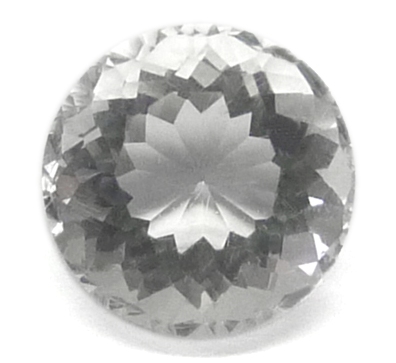 Figure 1. 0.70 ct colorless sodalite from Afghanistan
| Shape | round brilliant cut |
| Size | Ø 5.9 x 3.9 mm |
| Color | colorless |
| Lustre | dull vitreous |
| Weight | 0.70 |
| SG | 2.3 |
| RI | 1.484 |
| DR | - |
| Pleochroism | none |
| Polariscope / Conoscope | isotrope |
| SWUV | inert |
| LWUV | faint orange |
| Magnetic susceptibility | none |
Table 1. Observational and measured properties
Infrared reflectance spectroscopy:
The IR reflectance spectrum (figure 2) was acquired from the gemstone table. It does not match analcime spectrum but sodalite spectrum. Nosean, belonging to sodalite group as the haüyne, lazurite and tugtupite has a spectrum very similar to sodalite but the two distinct 667 and 737 cm-1 bands are diagnostic for sodalite, thus excluding nosean. Nosean spectrum is much closer to haüyne with which the nosean forms a solid-solution serie.
 Figure 2. IR reflectance spectrum of the 0.70 ct colorless sodalite from Afghanistan acquired from the stone table. The two distinct reflectance bands at 667 and 737 cm-1 are diagnostic for sodalite.
UV-VIS-NIR spectroscopy:
Not applicable since the gemstone is colorless.
Photoluminescence spectroscopy:
The photoluminescence obtained with a 405 nm source is pink and it is moderate to strong. The spectrum (figure 3) shows the 570, 604, 624, 645 and 665 nm emission bands that are attributed to the S2-, with a characteristic banded spectrum due to symmetric vibrations of sulfur atoms in the host molecules. With this gemstone, not all emissions 'bands' can be distinguished at room temperature.
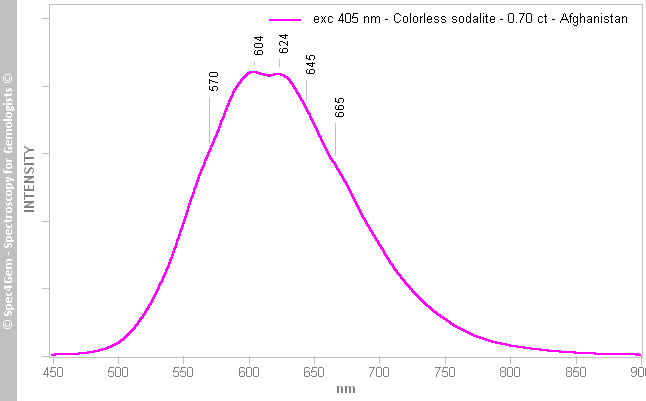 Figure 3. Photoluminescence spectrum of the 0.70 ct colorless sodalite from Afghanistan excited by a 405 nm laser source. The 570, 604, 624, 645 and 665 nm emission features are attributed to the S2-. Not all symmetric vibrations of sulfur are distinguished here.
Note also the bands are located at wavelength slighly lower than in sodalite var. hackmanite. This is consistent with sodalite data. The symmetric vibration constant Δk is also a bit higher, 575 cm-1 against 570 cm-1 for sodalite var. hackmanite [1], [2], [3].
Discussion:
Both spectroscopic results and classical gemology properties are consistent with sodalite data. The gemstone is a colorless sodalite without any (or not observable) reversible photochromism (tenebrescence), thus it cannot be considered as a sodalite var. hackmanite.
[1] Luminescent Spectra of Minerals, Boris S. Gorobets and Alexandre A. Rogojine, Moscow, 2002, ISBN: 5901837053
[2] Luminescence Spectroscopy of Minerals and Materials, M. Gaft, R. Reisfeld, G. Panczer, Springer Editor, ISBN: 103540219188
[3] The luminescence and tenebrescence of natural and synthetic sodalite, Russel D. Kirk, Solid State Division, Naval Research Laboratory, Washington 25, D.C.