
Grandidierite was an extremely rare mineral that was first discovered in 1902 in southern Madagascar. The grandidierite has already been described from several locations: Madagascar[1][2], Sri Lanka[3], New Zeland, Italy and Japan. It has a rather complex formula: (Mg,Fe2+)Al3(BO3)(SiO4)O2 and is classified in the nesosilicate group characterized by an isolated silicon tetrahedra [SiO4]4−, other members are olivine, zircon, ... The sample presented in the figure 1, is a massive form of grandidierite mixed with some other minerals but it is very representative of the material coming out at the moment from the Tuléar province in southern Madagascar.
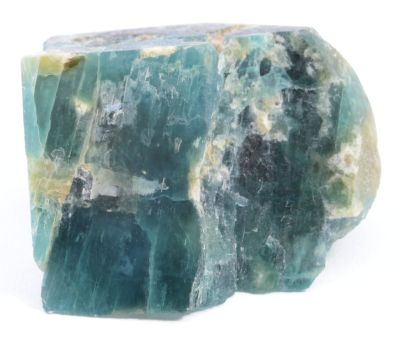 Figure 1. The 29.86 ct sample of green-blue grandidierite from
Tuléar, Madagascar.
| Shape | free form of a rock piece that was grinded and barely polished for spectroscopy |
| Size | 18.6 x 20.5 x 13.8 mm |
| Color | green-blue, the black areas are related to another material (amphibole) |
| Lustre | sub-vitreous to vitreous |
| Weight | 29.86 ct |
| SG | 2.95 (the value is unreliable because of the other material but it matches grandidierite values) |
| RI | was not polished enough to be able to read RI |
| DR | - |
| Pleochroism | - |
| Polariscope / Conoscope | - |
| SWUV | inert |
| LWUV | inert |
| Magnetic susceptibility N52 | very weak |
| Chelsea filter | inert (blue-green as without filter) |
Table 1. Observational and measured properties
Infrared reflectance spectroscopy:
Few IR reflectance spectra were acquired from polished area, the green-blue areas show the spectrum presented in figure 2. The bands in the 900-1200 cm-1 range are characteristic of silicate (SiO4 tetrahedron) while the bands in the 1200-1500 cm-1 are likely related to borate (BO3) which is usualy located around 1300 cm-1. The 400-800 cm-1 range is interesting because of its numberous bands revealing a quite complex molecular structure related to SiO4 (silicate) and BO3 (Borate). The litterature is really missing in this domain, this is the first IR reflectance spectrum of a grandidierite available within the database. An IR transmittance was found in Chukanov's book[4] and even if the spectroscopic methods differ, the spectra are really comparable, confirming the sample is really grandidierite.
The black material observed on the right handside of the sample in figure 1 was identified as an amphibole by the same IR reflectance spectroscopy. It is possibly hornblende but not furthrer investigation was conducted to determine the amphibole specie. The back of the sample shows important areas with this black material, the spectra were acquired from these areas, they are not reproduced here.
 Figure 2. IR reflectance spectrum acquired from the massive grandidierite of the figure 1 sample that shows a complex structure and a typical silicate spectrum pattern.
 UV-VIS-NIR spectroscopy:
The UV-Vis-NIR spectrum was acquired through a thin part of the sample to let enough light travel in the material to be able to measure the absorbance / transmittance. The spectrum displayed in the figure 3 shows a transmission window centered at around 500 nm bounded by rather strong absorption in UV and red and NIR. The features at 388, 444 and 460 nm in UV and blue and the strong and large hump at 750 nm followed by a stronger band at 975 nm suggests the color is likely caused by the Fe2/3+, this pattern is quite common in mineral colored by iron. Compared to olivine, the NIR bands (750 and 975 nm) occur at lower wavelength (higher energies) in grandidierite. A publication dated from 2003 about a faceted Sri Lankan grandidierite[3] states iron as the possible color cause.
 Figure 3. The UV-Vis-NIR spectrum shows a transmission window around 500 nm giving the green-blue color to the material. The spectrum pattern is consistent with iron (Fe2/3+) spectrum.
Photoluminescence spectroscopy:
Even if the rough stone is inert to the UV exposure, the 405 nm laser excitation produces a very weak red luminescence detected by the spectrophotometer, the spectrum is shown in figure 4. The spectrum is noisy because of the level signal. Spectrum pattern ican very likely be attributed to Cr3+ with its 704 and 727 emission peaks. According to Schmetzer et al. (2003)[3], the chemeical analysis realized on the Sri Lankan grandidierite shows some Cr traces, similarly Cr can also be present in the stones from Madagascar.
 Figure 4. The 405 nm excitation photoluminescence spectrum of the massive grandidierite sample with its very weak red emissions can be very likely attributed to Cr3+.
Conclusion:
Grandidierite data are still scarse but the sample can be confirmed as grandidierite by its IR spectrum and it very likely owes its color to iron (Fe2/3+). The very weak red luminescence is very likely caused by Cr3+. The forthcoming material in the next months will generate more publications and data about this rare material.
[1] Some rare blue gemstones. Journal of Gemmology, 1964, Vol. 9, No. 5, pp. 182-184.
[2] African grossular garnets; blue topaz; cobalt spinel; and grandidierite. Journal of Gemmology, 1977, Vol. 15, No. 7, pp. 354-358.
[3] The first transparent faceted grandidierite from Sri Lanka. Gems & Gemology, 2003, Spring, p. 32.
[4] Infrared spectra of mineral species, Nikita V. Chukanov, 2014, Springer, ISBN: 978-94-007-7128-4.