
Sphalerite is a zinc sulfide mineral with a chemical composition of (Zn,Fe)S, ideally ZnS. It is found in many parts of the world and is the most commonly encountered zinc mineral making it the world's most important ore of zinc. It occurs in many colors such as yellow, orange, brown, red, black but more rarely in green or colorless. Up to now, few localities produce the green color: Zatlograd (Bulgaria), Colorado (USA) and possibly Russia. Sphalerite is common as a gemstone but top quality is rather rare, most of the stone are included with small crystals and veils. Because of its softness, only 3.5 to 4 on the Moh's scale, its use in jewellery is limited. Sphalerite shows a very high dispersion (0.156) which is about four times that of diamond, making these stones beloved for their fires!
The gemstone (figure 1) is difficult to photograph because the material is highly reflective (adamantine to almost metallic luster in some directions) and because the crown facets are cut with a strong angle (height crown) causing lot of reflections from the sides.
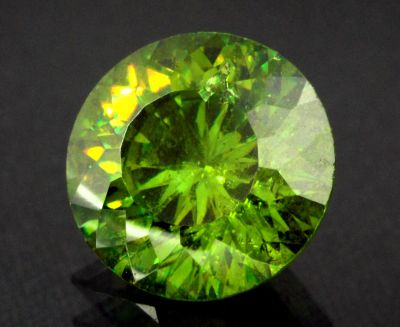 Figure 1. 2.71 ct green sphalerite from Zlatograd area in Bulgaria.
| Shape | round mixed cut (crown: portuguese cut / pavilion: brilliant cut) |
| Size | Ø 8.4 x 5.1 mm |
| Color | green (possibly slighly yellowish-green under warm light, the high dispersion may modify the global color appreciation) |
| Lustre | adamantine |
| Weight | 2.71 ct |
| SG | 4.11 [3.90 - 4.12] |
| RI | OTL, about 2.4 measured by reflectivity, high dispersion [2,369 - 2,431] |
| DR | not applicable, isotropic |
| Pleochroism | not applicable, isotropic |
| Polariscope / Conoscope | stays dark through 360° rotation → isotropic |
| SWUV | inert |
| LWUV | inert |
| Magnetic susceptibility N52 | inert |
| Chelsea filter | blue-green |
Table 1. Observational and measured properties
High SG 4.11 indicates a low to very low iron (Fe) content, in which Fe substitutes for Zn, in the formula (Zn,Fe)S [1].
Infrared reflectance spectroscopy:
The IR reflectance spectrum (figure 2) acquired from the stone's table of the green sphalerite shows a continuous increase of reflectance towards high wavenumbers. It is consistent with other sphalerite spectra even if the spectrum is rather simple and does not show any particular band.
 Figure 2. The IR reflectance spectrum of this green sphalerite shows a continuous increase of reflectance towards high wavenumbers.
UV-VIS-NIR spectroscopy:
The UV-Vis-NIR spectrum (figure 3) of this green sphalerite gemstone was collected without any polarizer since the material is isotropic and with the light path entering the stone via its culet and collecting through the table. The length of the light path through the stone is about 5 mm and even with such weak depth, the spectrophotometer's limits are reached. The absorption bands around 715 nm are as high as 3.3 and even more, that makes an absorption coefficient per centimeter of about 6.6 (cm-1). Measuring such absorption requires a spectrophotometer with a dynamic which is higher than 2000/1 ratio. Unfortunately, such device is not available in my lab! The other solution is to reduce the light path by reducing the stone height! These bands are thus truncated as a consequence of the spectrophotometer's limits.
The spectrum (figure 3) shows a main feature (strong and broad band(s)) around 715 nm, some much weaker absorption at 593, 565, 495 and 472 nm and an absorption edge towards UV starting around 450 nm.
 Figure 3. The UV-Vis-NIR spectrum of this green sphalerite shows a strong and broad band around 715 nm (truncated because of spectrophotometer's limits) and few relatively weak features at 593, 565, 495 and 472 nm followed by an absorption edge towards UV starting at 450 nm. This spectrum is ascribed to Co2+ replacing Zn in the ZnS lattice crystal.
Because of the truncated bands around 715 nm it is impossible to analyze the electronic transitions. According to the following studies: Gumlich & Schulz (1966)[2], Platonov & Marfunin (1968)[3] , Cervelle et al. (1989)[4], Weakliem (1962)[5], Rager et al. (1996)[6] such spectrum is the result of Co2+ replacing Zn in the ZnS crystal lattice.
Photoluminescence spectroscopy:
This green sphalerite does have any photoluminescence with the following excitation sources: 254, 280, 375, 405, 442, 532, 670 and 780 nm. The 670 and 780 nm excitations could have produce some luminescence since the Co2+ absorptions are located on this particular range of the spectrum but nothing happened. Anyway, there is no report about cobalt luminescence in literature.
Conclusion:
This green sphalerite collector's gemstone from Zlatograd area in Bulgaria has properties which are consistent with sphalerite specie. Its high SG indicates a very low iron content. The gemstone owe its green color to cobalt present as Co2+ by substituting Zn.
[1] Rock Forming Minerals, vol. 5, p. 174, 1962 - Wiley - W. A. Deer, R. A. Howie, and J. Zussman
[2] Optical transitions in ZnS type crystals containing cobalt - Gumlich, H.-E. & Schulz, H.-J. - Journal of Physics and Chemistry of Solids, 1966, 27, pp. 187-195.
[3] Optical absorption spectra of sphalerites - Platonov, A.N. & Marfunin, A.S. - Geochemistry International, 1968, 5, pp. 245-260.
[4] Determination, par microréflectometrie diffuse, de la concentration en Co2+ tétraédrique dans les sphalerites - Cervelle, B., Cesbron, F., Drin, N. - European Journal of Mineralogy, 1989, 1, pp. 127-133.
[5] Optical spectra of Ni2+, Co2+, and Cu2+ in tetrahedral sites in crystals - Weakliem, H A. - Chemical Physics Journal, 1962, 36, pp. 2117-2140.
[6] Colour, crystal chemistry, and mineral association of a green sphalerite from Steinperf - Rager H., Amthauer G., Bernroider M.,Schürmann K.- European Journal of Mineralogy, 1996, 8, pp. 1191-1198